The Role of Protected Amino Acids in Animal Nutrition: Increased Bioavailability through Rumen Protection
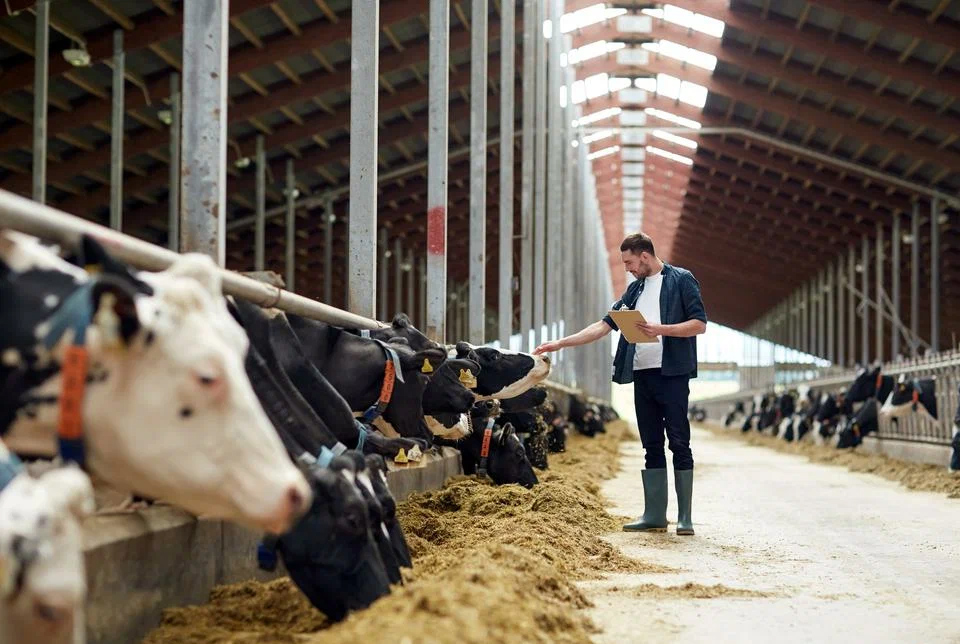
Amino acids are the fundamental building blocks for protein synthesis, milk production, muscle development, and metabolic balance in animal production.
However, in ruminants, due to the intense microbial activity in the rumen environment, many amino acids are degraded before absorption, reducing their bioavailability.
The solution to this problem is “coated,” or rumen-protected amino acid technologies.
Amino Acid Losses in the Rumen Environment
The rumen pH is around 6–7 and contains thousands of microorganisms. These microorganisms break down free amino acids obtained from feed and use them as an energy source.
Especially essential amino acids such as methionine and lysine are degraded in the rumen by 70–90% and cannot reach the small intestine.
This significantly limits the effectiveness of conventional amino acid supplements.
What Is Coating Technology?
Coating (protection) technology allows amino acids to pass through the rumen without dissolving by applying a layer of fat, fatty acid derivatives, or polymers to their surface.
This enables the amino acid to pass intact through the rumen and be released in a targeted way in the small intestine for direct absorption.
Modern technologies aim to balance controlled release and high bioavailability.
Comparison of Coating Types
Coating Type | Advantages | Disadvantages | Dissolution Point / pH Range
Lipid-Based Coating | High heat resistance, natural fats | Oxidation risk in hot climates | pH 2–3 (small intestine)
Polymer-Based Coating | High rumen stability, controlled release | Higher cost, complex production | pH 2–4 (duodenum)
Microencapsulation | Nano-scale protection, high bioavailability | High production cost, sensitive storage | Controlled release (pH 2–6)
Differences Between Coated and Uncoated Amino Acids
Criterion | Uncoated Amino Acid | Coated Amino Acid
Rumen Stability | 10–30% | 80–95%
Absorption Site | Rumen (microbial degradation) | Small intestine (targeted absorption)
Bioavailability | ~20% | 70–90%
Effect on Milk Yield | Limited | Increased milk fat and protein
Energy Efficiency | Low | High
Economic Return | Low | High efficiency
Methionine and Lysine: The Two Most Critical Amino Acids
Rumen-Protected Methionine:
- Supports liver function and regulates fat metabolism.
- Increases milk fat percentage and protects against energy imbalance.
- Achieves up to 80% bioavailability thanks to rumen protection.
Rumen-Protected Lysine:
- A limiting amino acid in milk protein synthesis.
- Effective in muscle growth and reproductive performance.
- Bioavailability increases from 25% (unprotected) to 75% (protected).
Bioavailability Differences Supported by Scientific Data
Amino Acid | Form | Bioavailability (%) | Performance Effect
Methionine | Uncoated | 20–30 | Low milk fat, risk of fatty liver
Methionine | Coated | 75–85 | +0.2% milk fat, improved energy balance
Lysine | Uncoated | 25–35 | Limited increase in milk protein
Lysine | Coated | 70–80 | +0.3% milk protein, faster muscle development
Retrovet Academy Note
Retrovet sees rumen-protected amino acid technology not only as a productivity enhancer but as the foundation of metabolic health and energy efficiency.
The company’s R&D studies show that particularly the combination of coated methionine and lysine contributes significantly to preventing fatty liver, balancing milk fat–protein ratios, and increasing heat-stress resilience.
Using microencapsulation and pH-sensitive systems in coating technologies maximizes the bioavailability of products.
Coated amino acids are one of the most advanced technologies in feed additive science.
This technology enables amino acids to reach their target organ, increases bioavailability, and provides long-term improvements in production performance.
With Retrovet’s scientific approach, rumen-protected methionine and lysine products set a new standard in animal production.
“Retrovet – Bioavailability Protected by Science.”